
Small donations, which are usually between $1 and $10, have assumed outsize importance in the world of fundraising. A few dollars at a time, whether a finger tap on a mobile donation button, a checkout-line roundup, or a $2 show of support on a crowdfunding platform, these small gifts are everywhere.
Meanwhile, the advent of digital platforms, social media campaigns and mobile-first fundraising tools has brought micro-donations within reach of everyone. These days, it’s becoming easier for individuals to support causes they care about without having to break the bank. Now, small contributions have become the lifeblood of nonprofit organizations, media producers and even political campaigns.
But just as micro-donations can add up impressively over time, they can cost a lot, too — hidden in the form of transaction processing fees. But when each $1 gift carries a flat transaction fee, those can add up to significant costs on the total donated. That’s why maintaining the balance between processing fees and micro-donations is crucial for any organization or platform aiming to access this model in a sustainable way.
Here, let us discuss how to get the most out of micro-donations and minimize the financial frictions they introduce.
Why Micro-Donations Work: Psychology & Accessibility?
Micro-donations work, because they erase the psychological and financial frictions that typically accompany giving. Ask someone to contribute, say, $2 or $5, and there’s much less hesitation. It’s a sum so small that it is close to automatic — more like buying a coffee than making a momentous financial decision. This comfort with emotion likely makes donors more likely to act impulsively, too, to give without thinking twice about themselves.

Perhaps more importantly, they make a very much larger pool of donors possible. Even students or early-career professionals or those of us with modest disposable incomes can feel like we’re having an impact. For causes that make it big or respond to immediate needs — like natural disasters or health crises or global movements — thousands of small gifts can quickly build into real money.
Recurring donations also sees a bump from micro-donations. A $3 a month donation is small, but hundreds or thousands of donors small — and that adds up to a reliable, and scalable, income stream. This is a model adopted by several platforms where the supporter gives small amounts every now and then in return for updates, impact reports or exclusive content.
Accessibility and emotional connection are the foundation of micro-donations. But to meaningfully leverage that power, organizations also need to think about how processing fees can eat those small gifts — something that we’ll tackle next.
The Math: How Small Donations Add Up
Micro-donations may not add up to much alone, but collectively they can make a serious splash. Consider this example: if 10,000 people contribute just $5 each, that’s $50,000 raised—generally at a faster pace than a scant few big donors pledging thousands. Now consider recurring support. Just 1,000 people committing to $2 per month brings in $24,000 per year—reliable funding that can help organizations plan ahead.
Where traditional fundraising can sometimes be about chasing a few big donations, micro-donations are about building a wide base. Small donors foster a sense of community and ownership. Individuals are more likely to share the campaign, invite others to participate and to feel an emotional connection to the mission. And, your visibility, credibility and reach are turbo taxed with this type of grass roots energy.
Donor retention is valuable as well. It is difficult to keep a high-level donor year after year, but smaller donors you can retain if you are good at communication and if you can articulate your impact. As trust grows, so does the potential to raise their monthly amount, or turn them into advocates or even fundraisers, over time.

In sum, micro-donations are about more than just feeling good. They create stable, scalable support. But to maximize their value, you have to be scrupulous about processing fees because with smaller amounts, every penny counts.
The Hidden Cost: Understanding Processing Fees
While micro-donations bring in broad support, they come with a lesser-known challenge: processing fees charged by payment processors. Each time a payment is made — whether $1 or $1,000 — payment processors, such as Stripe, PayPal or RazorPay, take a cut. These costs generally consist of a fee per transaction — which typically includes a flat rate plus a percentage, like 2.9% + $0.30 per transaction.
Now, this fee model doesn’t matter much with large donations. But with micro-donations, it quickly adds up. Take a $1 donation: the $0.30 flat fee alone eats up 30% of the gift—before you even consider the 2.9% percentage. On a $5 donation, the total fee might be around $0.45, which is about 9%. In other words, the smaller the donation, the bigger the bite that processing fees take.
At scale, this cost becomes even more pronounced. If you raise $50,000 in $5 donations, you could end up losing $4,500–$5,000 just in fees. That is the money that could have been spent on frontline services, supplies or outreach. Most nonprofit organizations, especially small or grassroots campaigns, don’t include that in their budget. You see, they work on gross figures without considering the result after deductions.
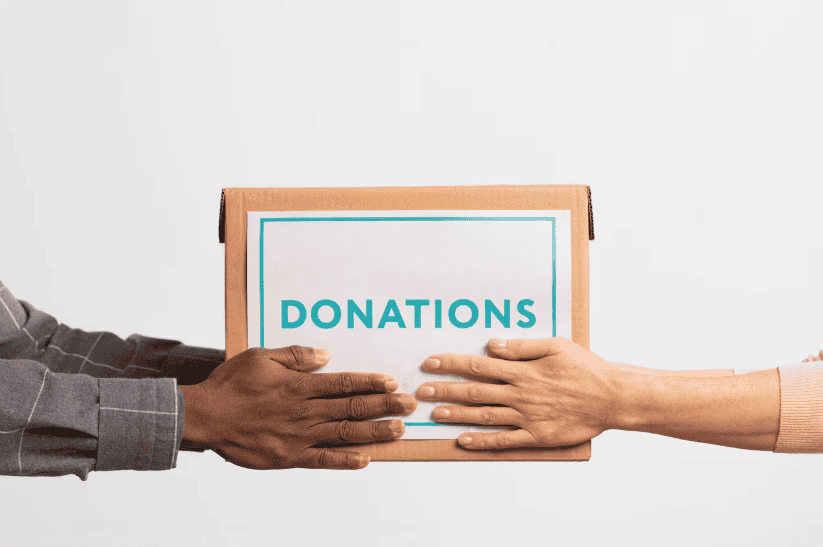
These losses erode campaign efficiency over time. For any platform or charity using substantial quantities of micro-donations, knowing the true cost of each transaction is essential. Worse, when supporters don’t know about the fees, they think all of their money goes to the cause — and trust problems can ensue if they ever find out.
That’s why it’s important to consider processing fees when designing your donation strategy. Whether that means selecting a low-fee processor, combining smaller donations into larger ones or soliciting monthly donations so that you can apply the same processing fees to a larger amount, thoughtful planning helps make every dollar count. Micro-donations have power but only if they’re safe from being chipped away at by unnecessary costs.
How to Maximize Impact Despite High Fees?
There may be no way around processing fees, but they do not mean to derail the power of micro-donations. Following some important strategies will help protect the value of donations and help more money go directly toward the mission.
First, encourage recurring donations. When a donor gives $2 every month, as opposed to all at once, the flat fee has less of an overall impact. That original 30 cents becomes less and less of a fee on repeat transactions. Plus, those who give regularly often feel more attached to the cause, meaning they’re more likely to remain involved and ramp up their support further down the line.
Second, what about bundling, or batch processing? Some payment processing solutions for nonprofits allow them to aggregate several micro-donations before payouts. So instead of incurring a processing fee for every $1 transaction, the processing fee is incurred once in each batch of transactions. This isn’t possible for everybody, but it’s worth looking into with your payment provider.
Finally, be transparent and ask donors for help. On many platforms users can now select an option at checkout: “Add $0.35 to cover processing fees.” Amazingly, most donors are happy to comply — particularly if you make your request clear. Something as simple as “Help your full donation reach us” can lead to high opt-in rates, particularly for mission-driven causes.

By employing these tactics, nonprofits are able to minimize the sting of processing fees and maximize the impact of every dollar. When all these systems are in place, even a small gift makes a big impact.
Conclusion
Micro-donations are revolutionizing the way we think about giving. These tiny donations are proving that nonprofits can raise a lot of money while connecting with an even larger, more diverse base of donors. They’re not just a matter of money, they’re a matter of participation, inclusion and community-building.
But there are hidden costs to micro-donations, as well. Payment processing fees, especially the flat transaction fees, can quickly erode away small gifts. That’s why calculated strategy is key. Be it promoting recurring giving, bundling payments, or asking funders to cover fees, a few small tweaks can have an outsize impact.
With the appropriate tools and communication in place, enterprises can realize the full potential of micro-donations— without allowing processing fees to get in the way of their good works. Amid this fast-paced, digital world everyone lives in today, letting more people give even a tiny bit could be the greatest force in fund-raising.
Frequently Asked Questions
1. What exactly counts as a micro-donation?
Micro-donations typically refer to contributions under $10. These small gifts are usually made online and are popular in crowdfunding or recurring donation models.
2. Are micro-donations actually effective for fundraising?
Absolutely. While individual amounts are small, when you scale across hundreds or thousands of donors, they can result in large totals. They’re especially useful in viral campaigns or causes with wide emotional appeal.
3. Do processing fees always reduce the donation amount?
Yes. Most payment processors charge a flat fee plus a percentage of each transaction. For micro-donations, the flat fee can eat up a bigger chunk. That’s why smart strategies—like batching or recurring giving—are important.
4. Can donors cover processing fees?
Yes, many platforms now offer an option for donors to add a little extra to cover fees. Most people are happy to do so, especially when it’s explained transparently.
5. Which platforms are best for handling micro-donations?
Look for platforms with low fees, batch processing options, and support for recurring giving. Options like GiveIndia, Patreon, GoFundMe, and custom integrations with Stripe or RazorPay work well.